
| Device | Flash drive |
|---|---|
| Manufacturer | SanDisk |
| Model | Ultra USB 3.0 |
| Capacity | 128 GB |
| Interface | USB 3.0 |
| Outcome | Full recovery |
Serial numbers and any customer-identifying details are deliberately omitted.
What came in
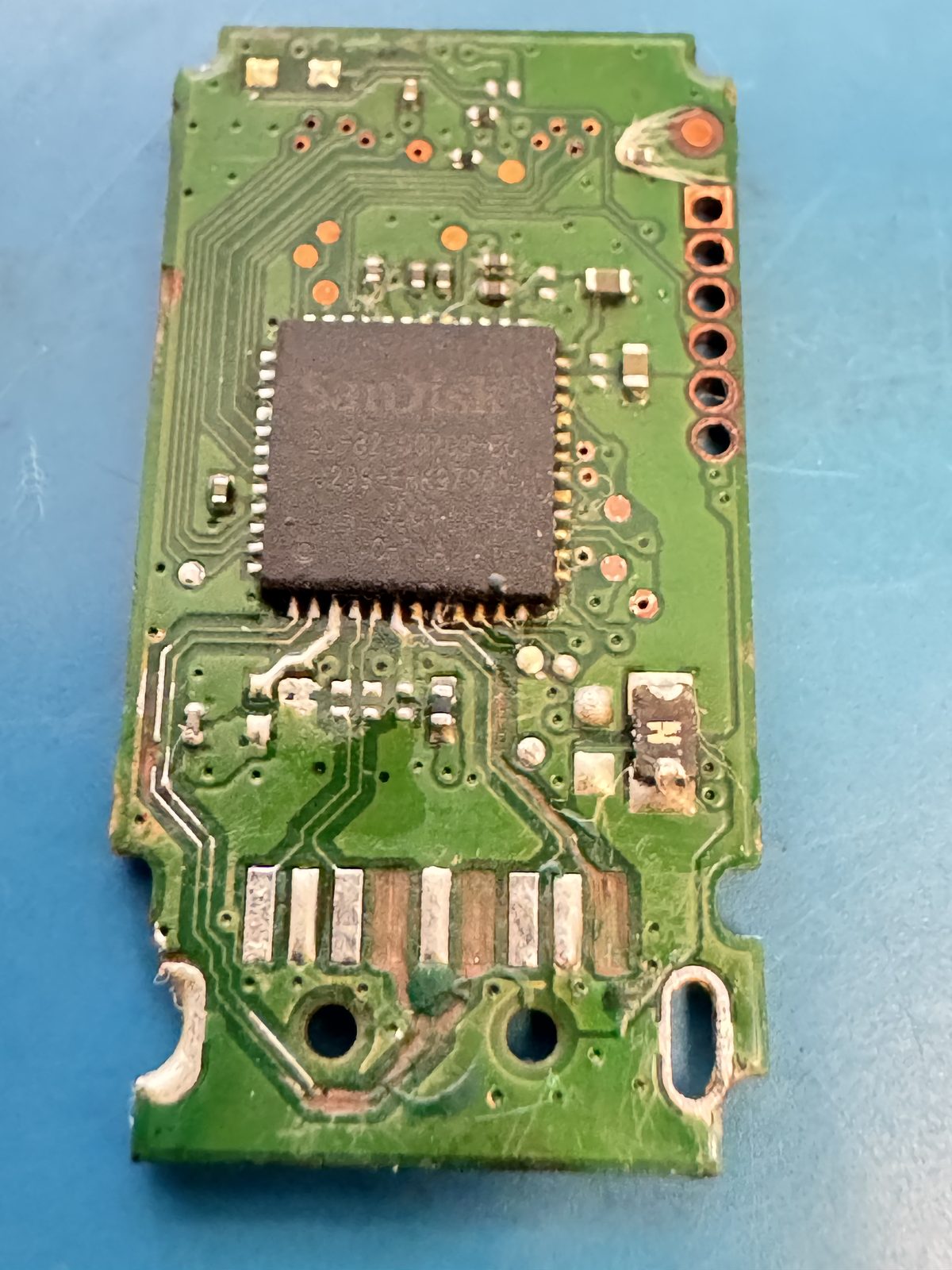
Checked in as physical damage after a drop. Before it reached us, the drive had already been to another recovery company, which attempted micro-soldering on the board and damaged it in the process. What arrived was no longer a simple drop case.
What we found
Board damage from the prior repair attempt, on top of the original drop. We confirmed the original controller (marked 20-82-00709-B0) was damaged and no longer functional. The NAND itself was also damaged, showing extensive ECC errors — which made the XOR reconstruction the controller relies on to lay the data back out considerably harder.
What we did
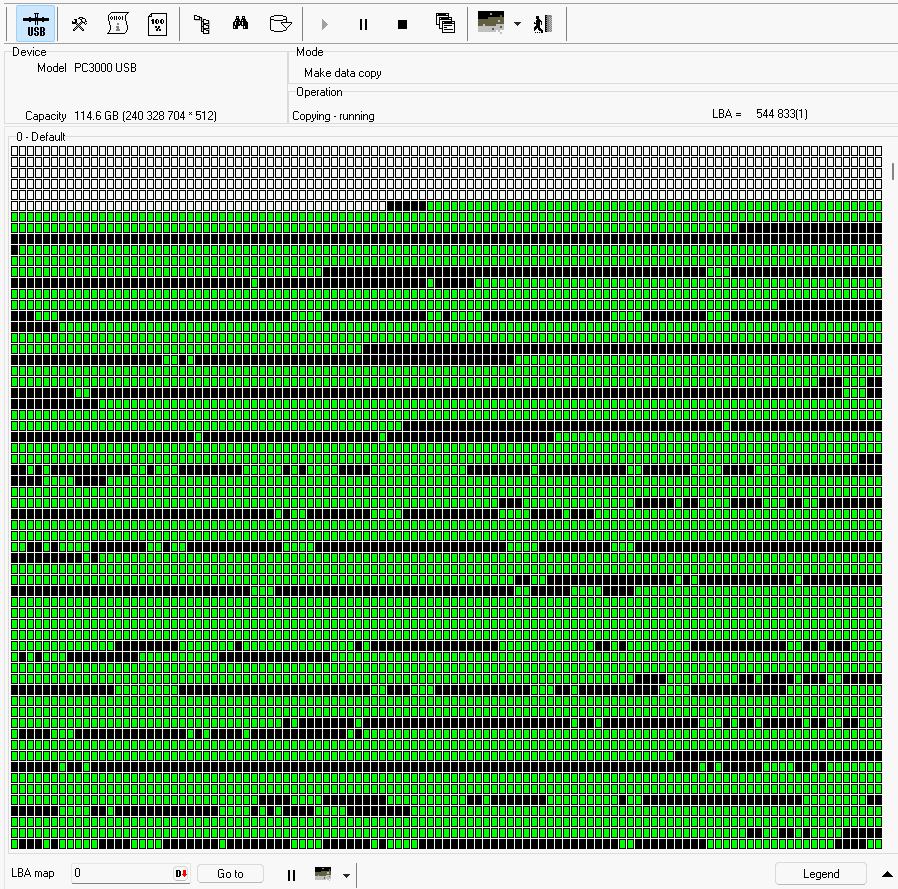
We first attempted chip-off with a virtual controller, but it did not yield usable results: between the extensive ECC errors and the limited amount of data actually written to the device, there was not enough to solve against. So we went the physical route instead — cleaned all of the connection points, migrated a donor controller onto a donor board, and moved the original NAND chip across. With temperature management applied during reading to keep the device stable, it identified in PC-3000 Portable Pro. From there we took a full image — working through the failing regions with repeated reads rather than accepting the first-pass errors — and ran the logical extraction from the image rather than the drive.
Outcome
Full recovery.
Despite the extensive ECC errors and bad blocks across the NAND — and the board damage stacked on top of the original drop — we were ultimately able to work through the failing regions and complete a full recovery. This arrived as a straightforward dropped-drive case, and the prior company's improper micro-soldering turned it into a far more complicated one, with extensive memory failures that made the recovery much harder and slower than it ever should have been. It is the clearest example we can point to of why the first attempt matters: we were not recovering a dropped flash drive, we were recovering a dropped flash drive plus somebody else's repair — and it still came back in full.
Dealing with something similar? See our flash drive data recovery service, browse more cases in the case log, or read about what makes recovery hard.
Have a flash drive in similar shape? Start with a free evaluation — we'll tell you honestly what's possible with your device.
Request free evaluation →Free evaluation · No data, no fee · Talk directly with a technician.